
Hummingbirds: still evolving endless forms most wonderful
A new study finds that the rising Andes is tied to the rapid speciation of hummingbirds. This study also predicts that hummingbirds will evolve twice as many species as what we see today.

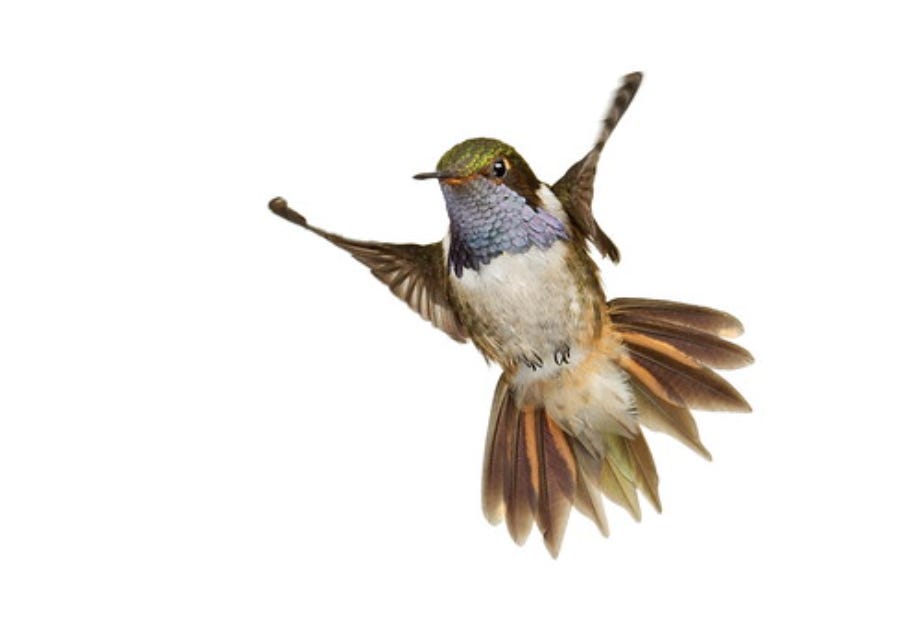
Volcano hummingbird, Selasphorus flammula, photographed on Cerro de la Muerte in Costa Rica. This species is a member of the Bee Hummingbird Clade.
(Credit: Anand Varma.)
“There is grandeur in this view of life, with its several powers, having been originally breathed into a few forms or into one; and that, whilst this planet has gone cycling on according to the fixed law of gravity, from so simple a beginning endless forms most beautiful and most wonderful have been, and are being, evolved.”
~Charles Darwin, On The Origin of Species (1859)
A comprehensive family tree for hummingbirds traces the rapid and ongoing birth of new species throughout this modern family’s 22-million-year history. The findings indicate that hummingbird diversification is driven primarily by two elements: by their exploitation of new niches created by the Andean uplift and expansion into new geographic regions, and by their unique relationship to flowering plants. Combined, these two elements support the large variety of distinct hummingbird species that live side-by-side in the same places. Further, although the rate of hummingbird speciation is slowing, this study finds that the evolution of new hummingbird species is still ongoing and is far from complete.
